



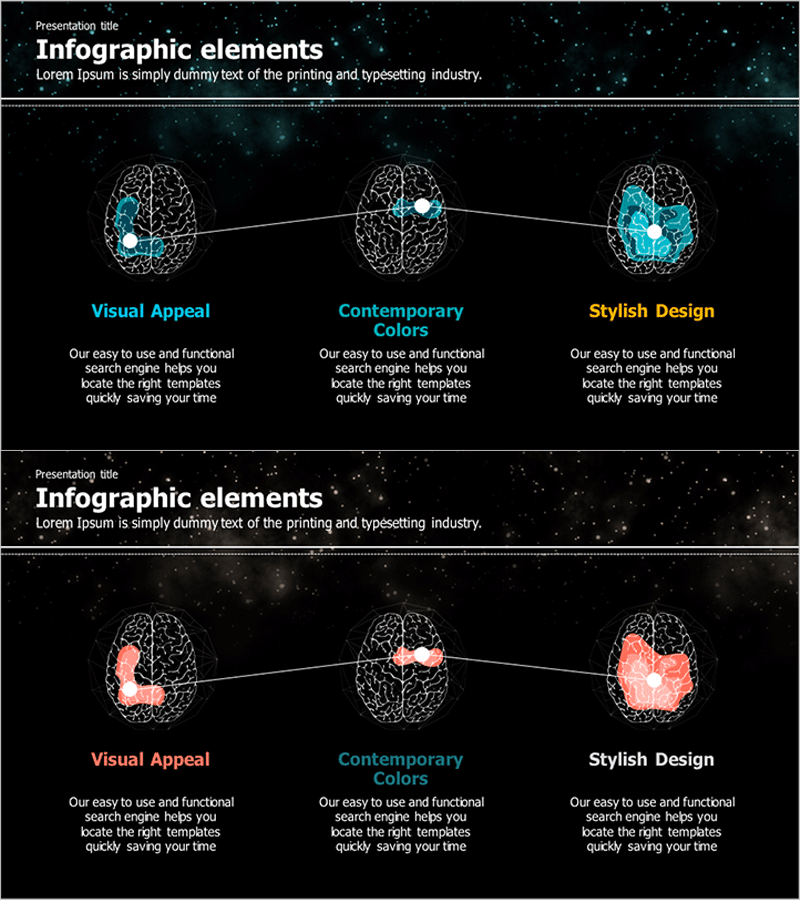
Diagram Explaining Brain Structure with Galaxy Theme
RJ0400001_19
- Last Update 05/17/2025
- File Size 14.1MB
- # of Slides 2
- File Format PPTX
- Slide Ratio 16:9
- Color
Keywords
- #Content-Based Slides
- #Design-Based Slides
- #Product/Service Introduction
- #Diagram
- #Development Status
- #Cluster
- #Closed Cluster Diagram
- #Chain Diagram
- #16:9
- #brain structure diagram PowerPoint
- #neuroscience presentation slide
- #3-stage connection diagram
- #galaxy theme template
- #science education PPT slide
About the Product
A brain structure explanation diagram PowerPoint slide with a galaxy theme. This presentation template features three brain images connected linearly, with stage-specific characteristics expressed in side text boxes, ideal for neuroscience, education, and product introduction presentations. The black background is accented with cyan blue and coral pink highlight colors, creating a contemporary and scientific atmosphere. The 2-slide set includes color variations (cyan and pink), provided in 16:9 widescreen PPTX format for immediate editing.
Usage Points
-
Main Usage
Optimized for neuroscience and brain science educational and research presentations to visually explain the stage-by-stage development or functional regions of the brain. Enables intuitive communication of complex neural structures in medical, scientific, and educational presentations.
-
How to Use
Three brain images are connected by linear connection lines, with text boxes positioned below each stage for description input. The galaxy background particle effect and cyan/pink accent colors enhance scientific credibility. Select the color variation (cyan or pink) that best matches your presentation topic and customize the text content.
-
Recommended For
Recommended for neuroscientists, medical professionals, educators, science communicators, pharmaceutical companies, and medical device manufacturers explaining brain function, neural circuits, and cognitive processes. Suitable for academic seminars, medical conferences, educational lectures, and product introduction presentations.
-
Slide Structure
The 2-slide set features a black background with three brain silhouette nodes arranged linearly on each slide. Connection lines extend left and right from the central node. Each brain image contains a cyan or pink activation area, with three text boxes below for stage-by-stage descriptions.
Related Products
-
Configuration Product Feature Guide – Diagram Based Introduction
#Product/Service Introduction #Diagram #Features
-
Visualizing Company Service Development Status with Diagrams
#Company Introduction #Product/Service Introduction #Diagram
-
Chemical Experiment Research Analysis Diagram – Innovation and Progress
#Company Introduction #Product/Service Introduction #Diagram
-
Business Development Status Donut Graph – A Template for Visual Communication
#Product/Service Introduction #Business Introduction #Diagram