


Decentralization Individual Empowerment
RL0100100_3
- Last Update 11/19/2025
- File Size 15.6MB
- # of Slides 2
- File Format PPTX
- Slide Ratio 16:9
- Color
Slide Preview
Keywords
About the Product
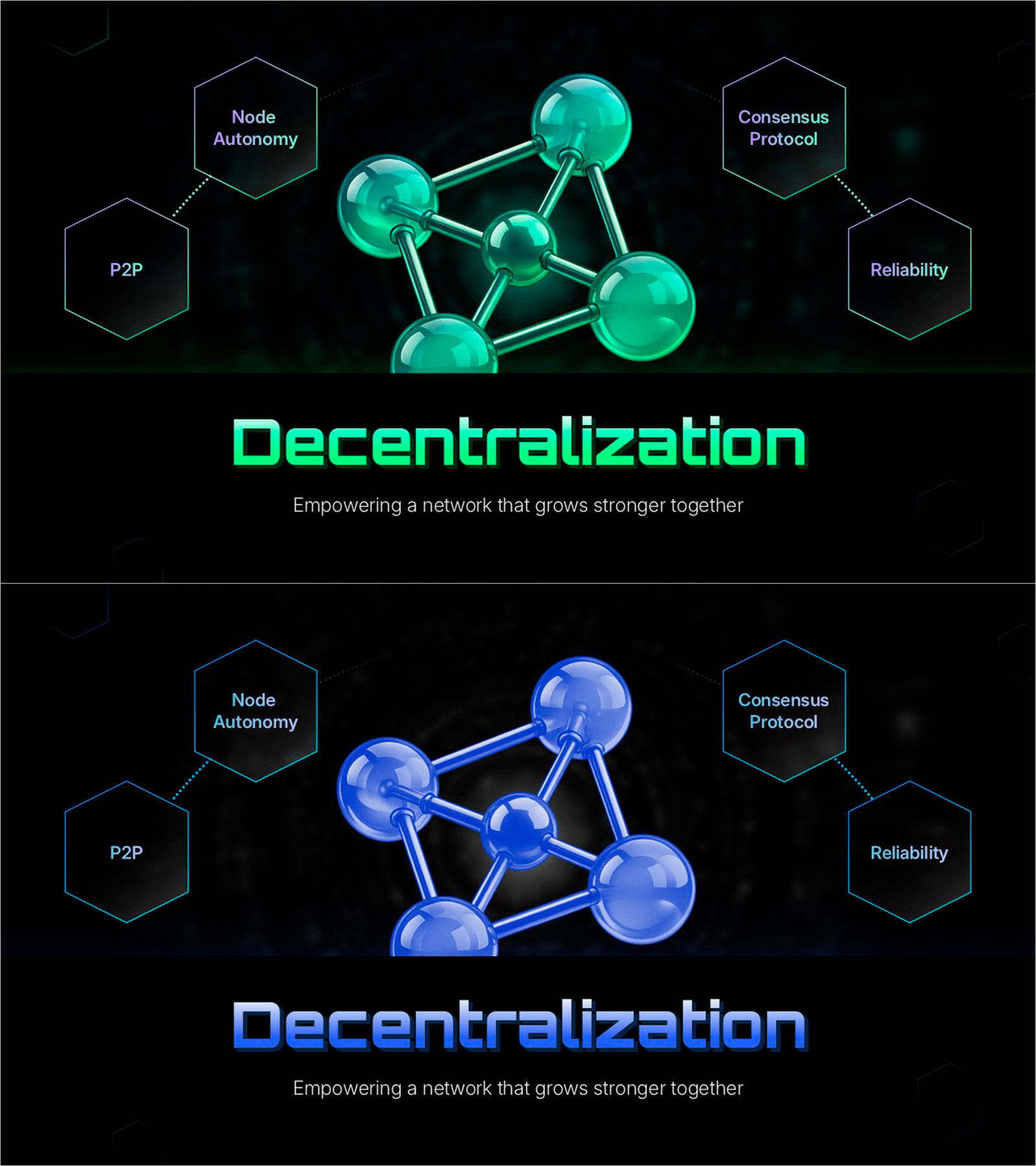
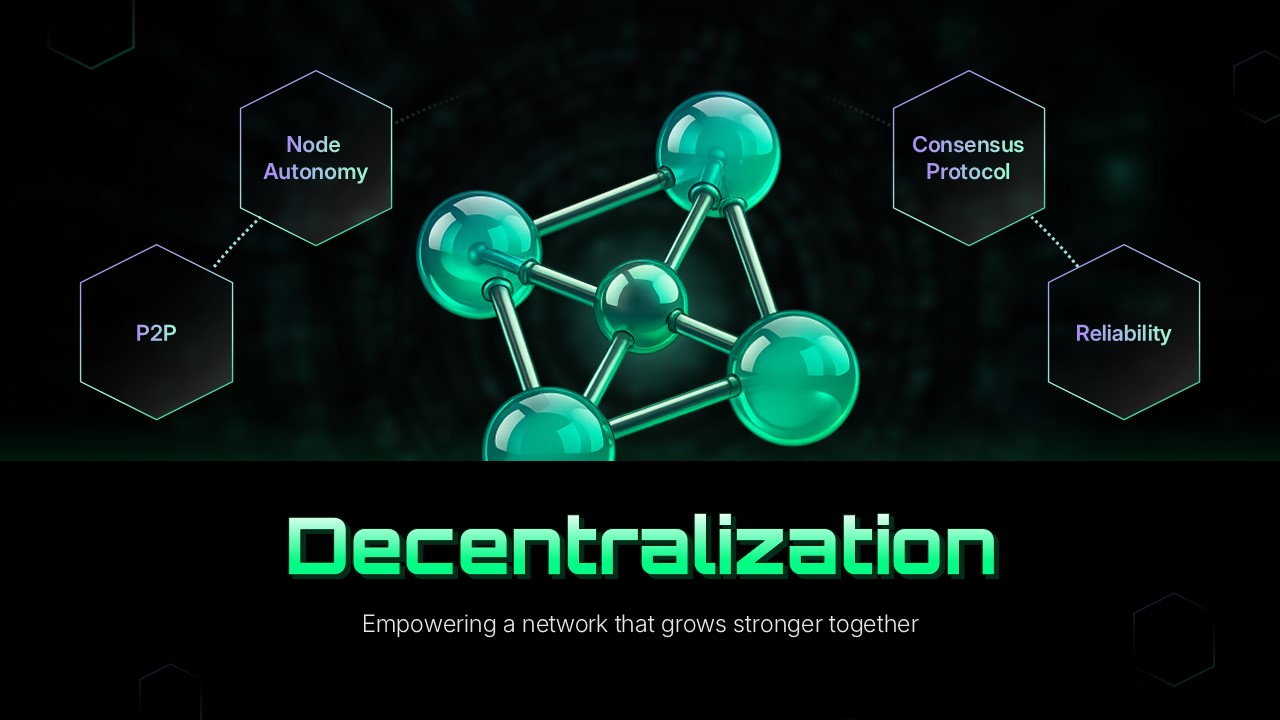
A PowerPoint slide that visualizes the core concepts of blockchain and distributed networks. The design features a central network diagram with four interconnected elements—P2P, Node Autonomy, Consensus Protocol, and Reliability—illustrating how decentralized systems operate. Cyan-glowing spherical nodes and connecting lines enhance credibility for technology presentations, making it ideal for cryptocurrency, Web3, and DeFi seminars explaining distributed ledger structures. Available in 16:9 PPTX format, fully editable and ready for blockchain education materials, technical presentations, and crypto technology briefings.
Usage Points
-
Main Usage
This slide explains the core concept of decentralized architecture in blockchain and distributed networks. Unlike centralized systems, it visually demonstrates how P2P, node autonomy, consensus protocols, and reliability interconnect, enabling audiences to grasp the decentralization model at a glance while enhancing presentation credibility.
-
How to Use
Use this slide in blockchain technology seminars, cryptocurrency investment briefings, Web3 business presentations, and DeFi platform introductions when introducing decentralization concepts. Customize the text boxes and node colors to match your organization's brand palette, and expand the slide by adding detailed explanations or data to the text areas.
-
Recommended For
Blockchain developers and technology presenters at cryptocurrency exchanges and fintech companies, university instructors teaching blockchain courses, Web3 startup founders presenting to investors, IT consultants and technical leaders explaining distributed system architectures, and enterprise architects designing decentralized solutions.
-
Slide Structure
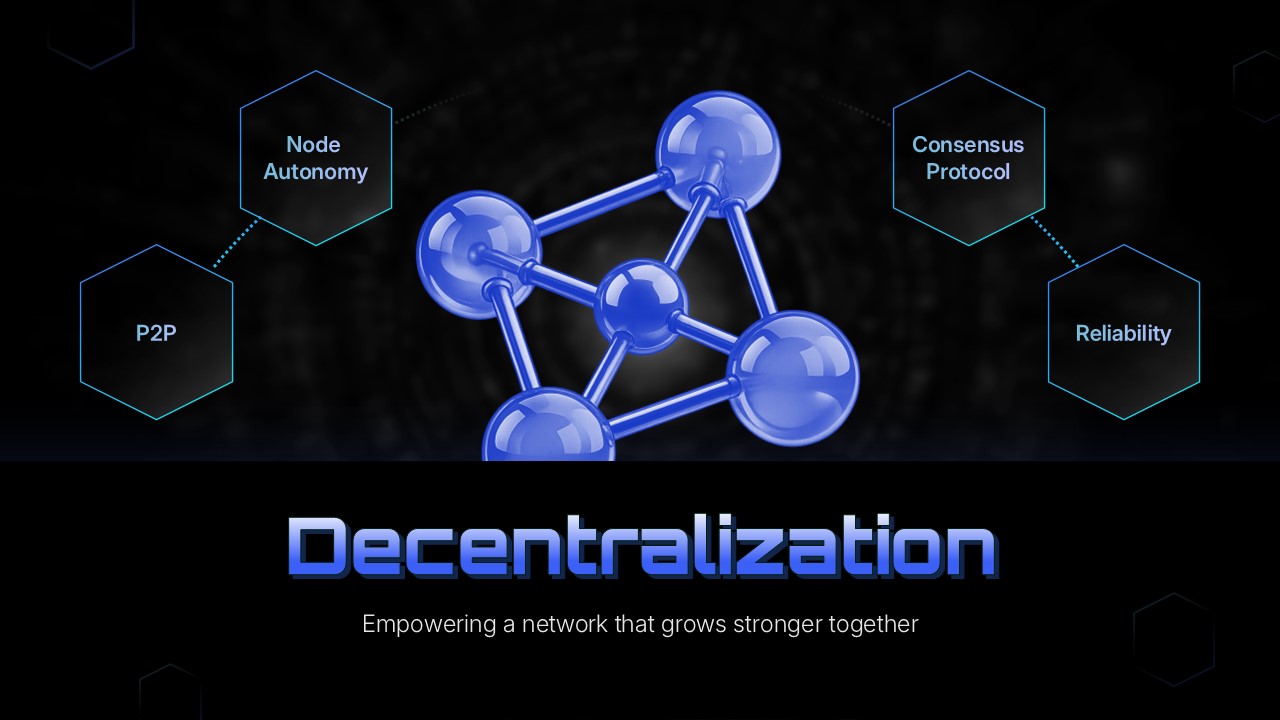
Two-slide composition: the first slide features the cyan-colored node connection diagram representing decentralized architecture, while the second slide presents the same structure in blue tones, offering color variation options. Each slide includes a central network diagram with four surrounding text boxes (Node Autonomy, P2P, Consensus Protocol, Reliability) for adding detailed explanations of each component.